

I wanted to ask you about your relationship to both textile and photography and how it appears in your work.
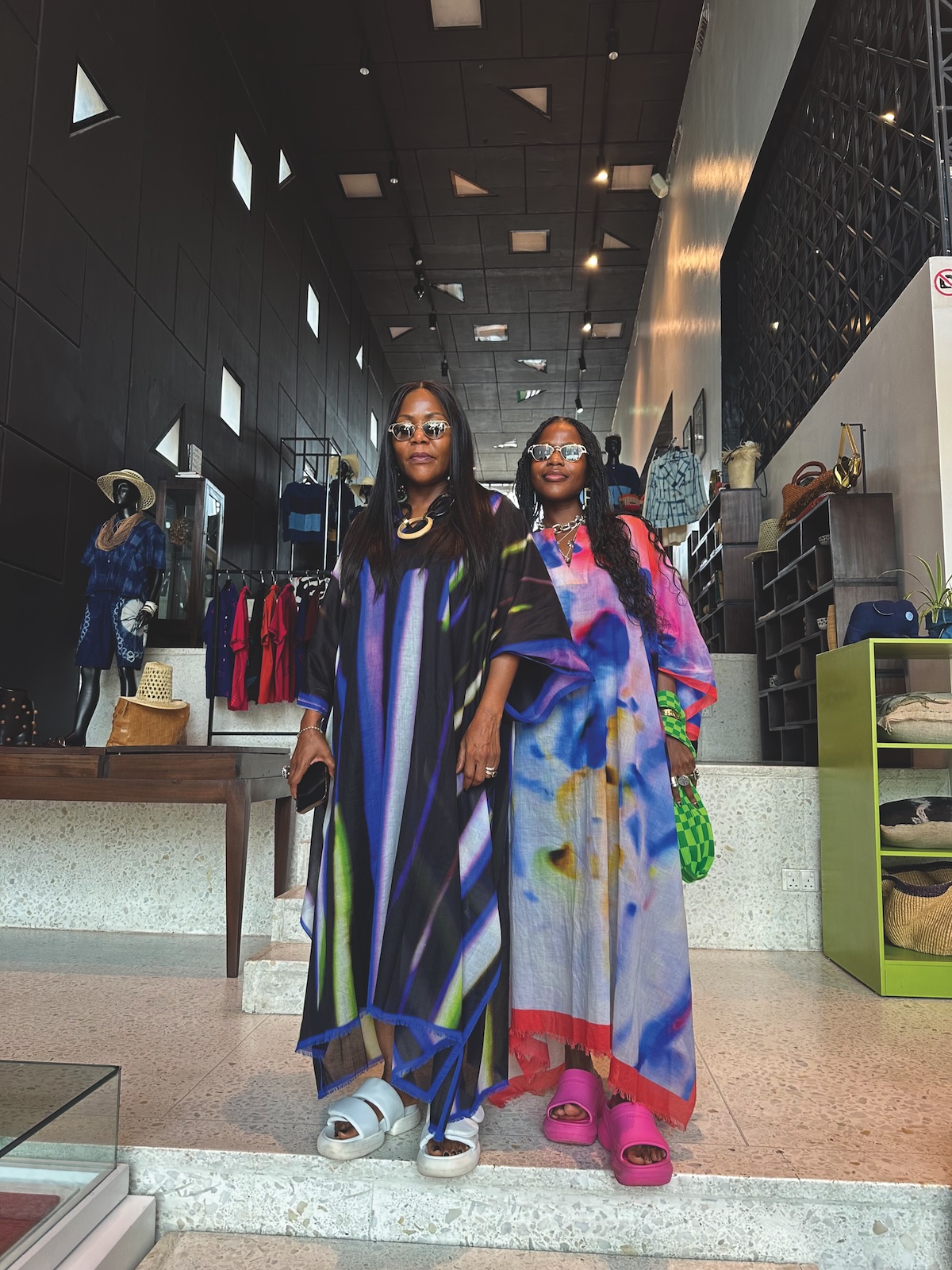
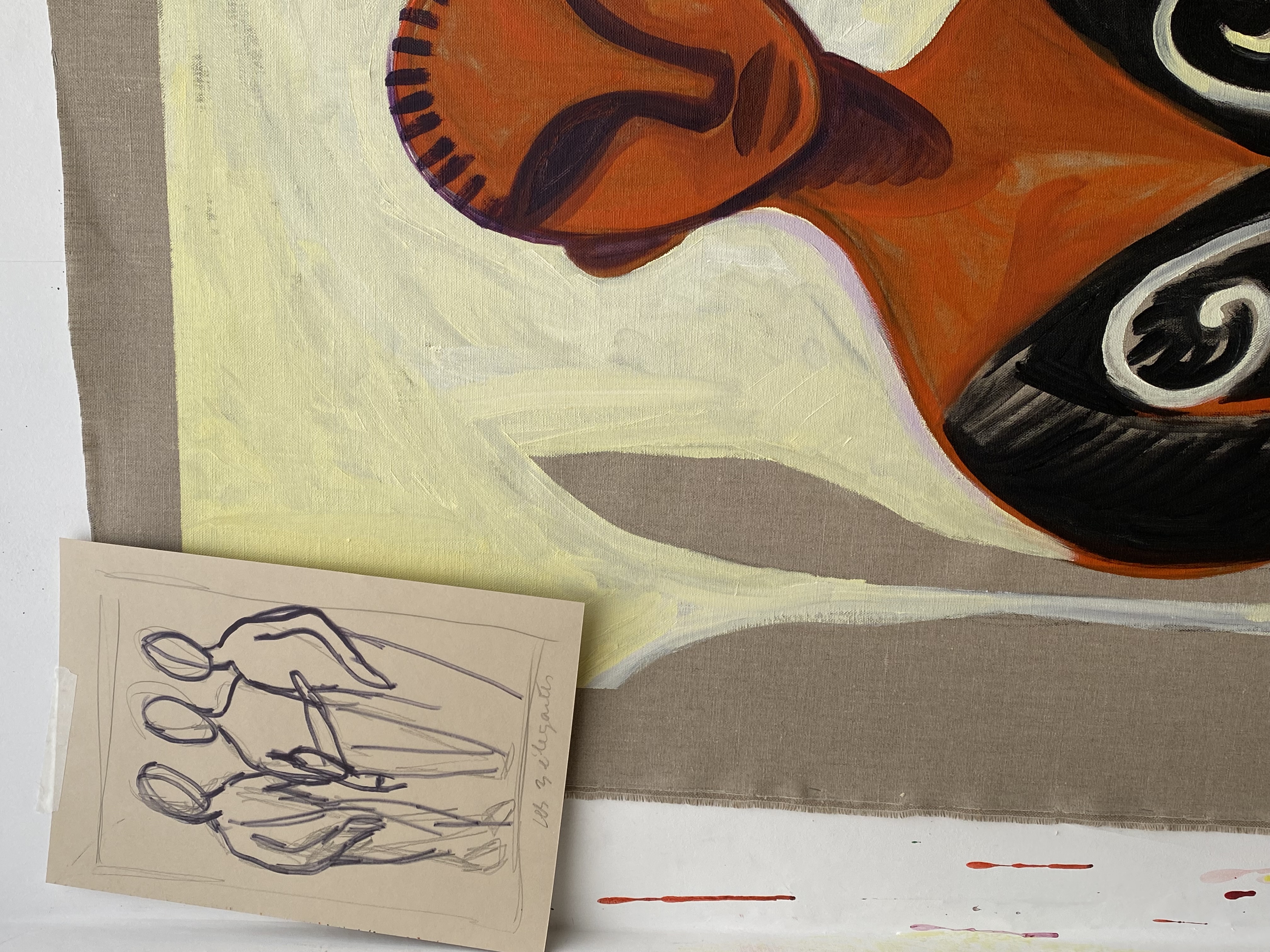
I really relate to sisterhood, to this feeling of never being alone, with only my people around me. I'm really surrounded by women. So it's something really important for me to represent this as a sort of ideal.
And my link to textiles is quite simple in that I was a textile design student. I didn’t do any Beaux Arts school or anything. Painting came to me through this process because I really liked to paint my textile design. I was more like a print textile designer. Textile was also the way I could reconnect with my Senegalese origins, because I don't know my father, and my mum never brought me to Senegal but I have a stepfather that is Ivorian. All the photographs by Seuydou Keita and Malick Sidibe were a real entry for me to see people in West Africa without all the imagery you saw in France.
You've always referenced art history in your work, I think both African art history and also European art history. And you were just saying that you don't have a formal art education in painting, right? So what do you see as your own relationship with art history?
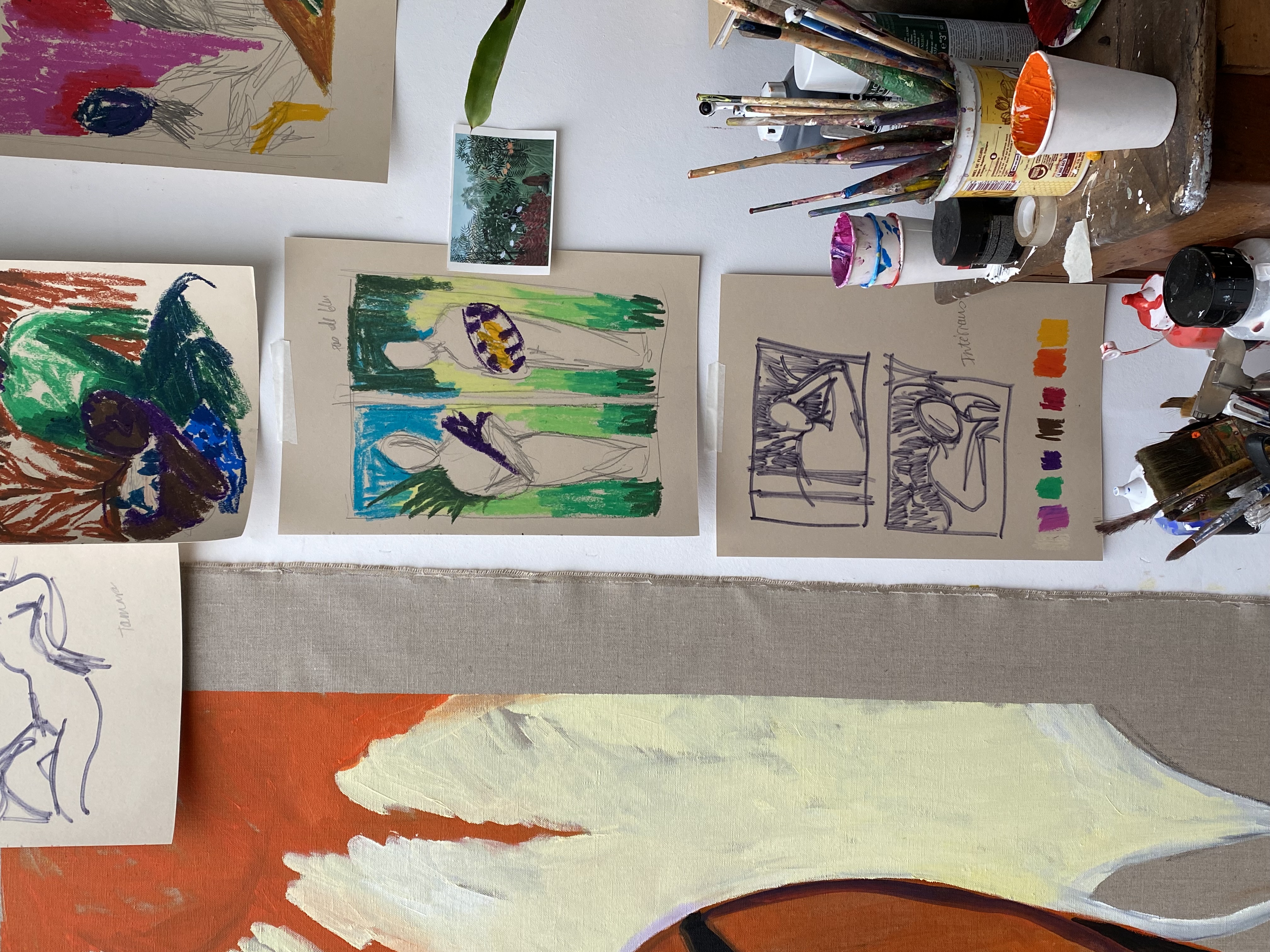
Yes, as you said, I had no proper art history education because I was in design. So I took the things that really interested me, for example, Matisse. When I see a painter that refers to patterns, to colour, those were the things that led me to painting. So for me, art history is a way to have a base to rely on. Like, I have a lot of references to the odalisque, but I also wanted to create a new feminine perspective in art history. For example Les Trois Grâces, was a reference to Les Trois Grâces by Cranach. So I like to open up a new perspective, one where the woman is not only the model, she can also be the one that creates the painting. So the woman is not only naked, and here to please the painter, she's here as a sister, as a friend. I don't want my paintings to be the archetype of the woman laying and just waiting for the man to see her. My women stare directly at the viewer. They are present, they are not naked. They are dressed! So it's a way for me to create something different from art history. When I see something I like, I’m like “yeah, I can do it my way.” As simple as that. Maybe that’s narcissistic, but I want to create things for myself.
