
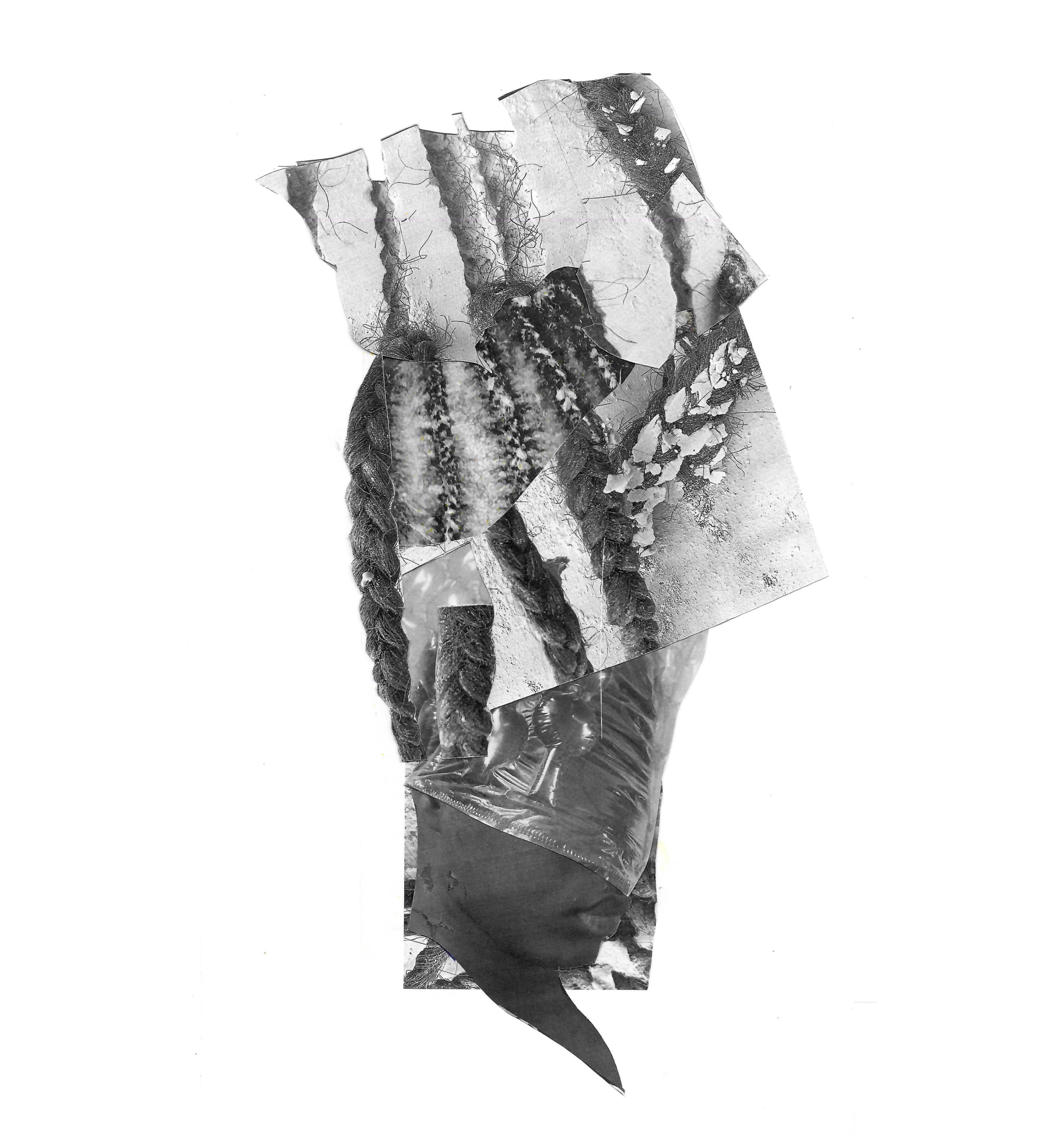
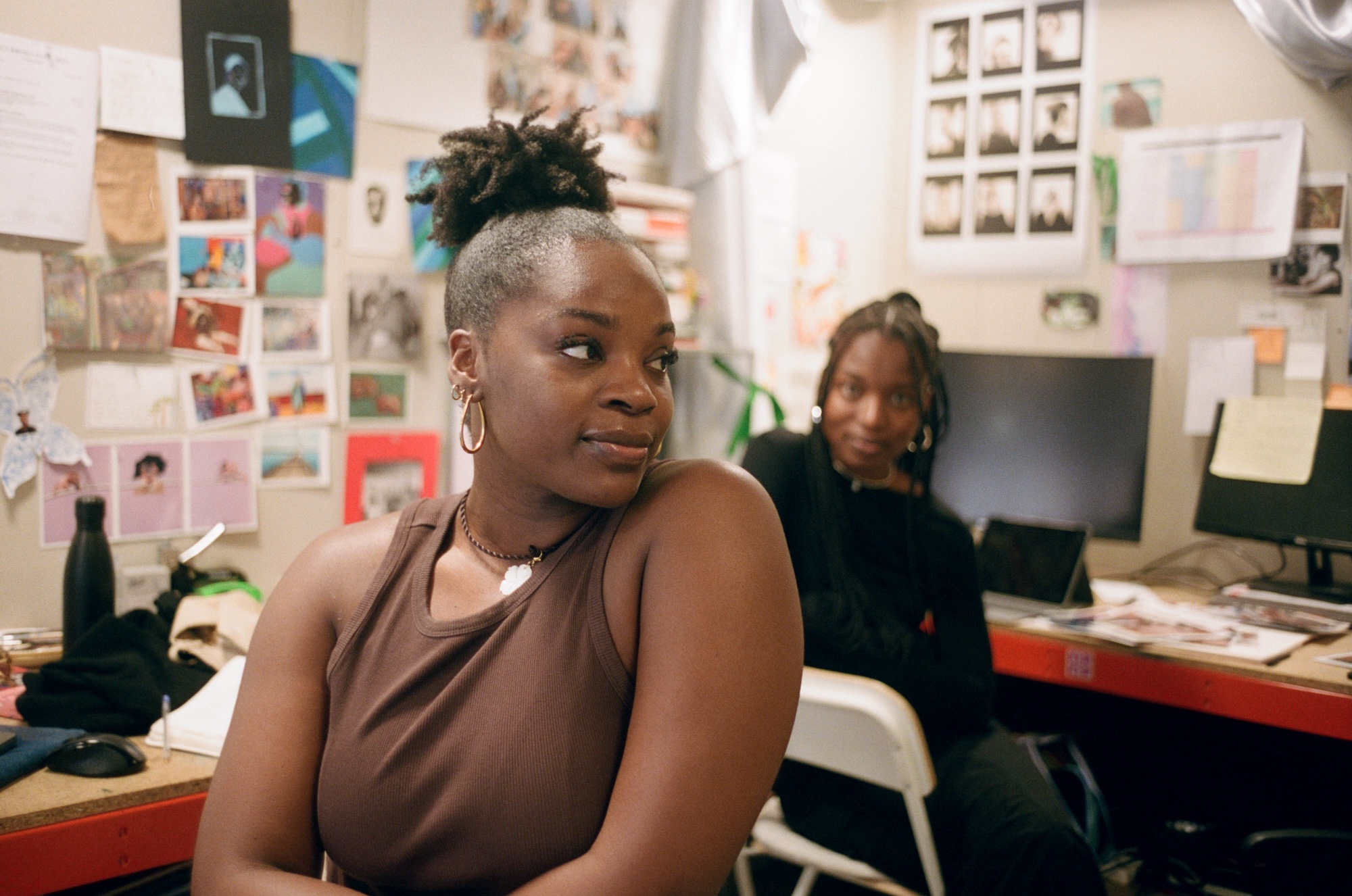

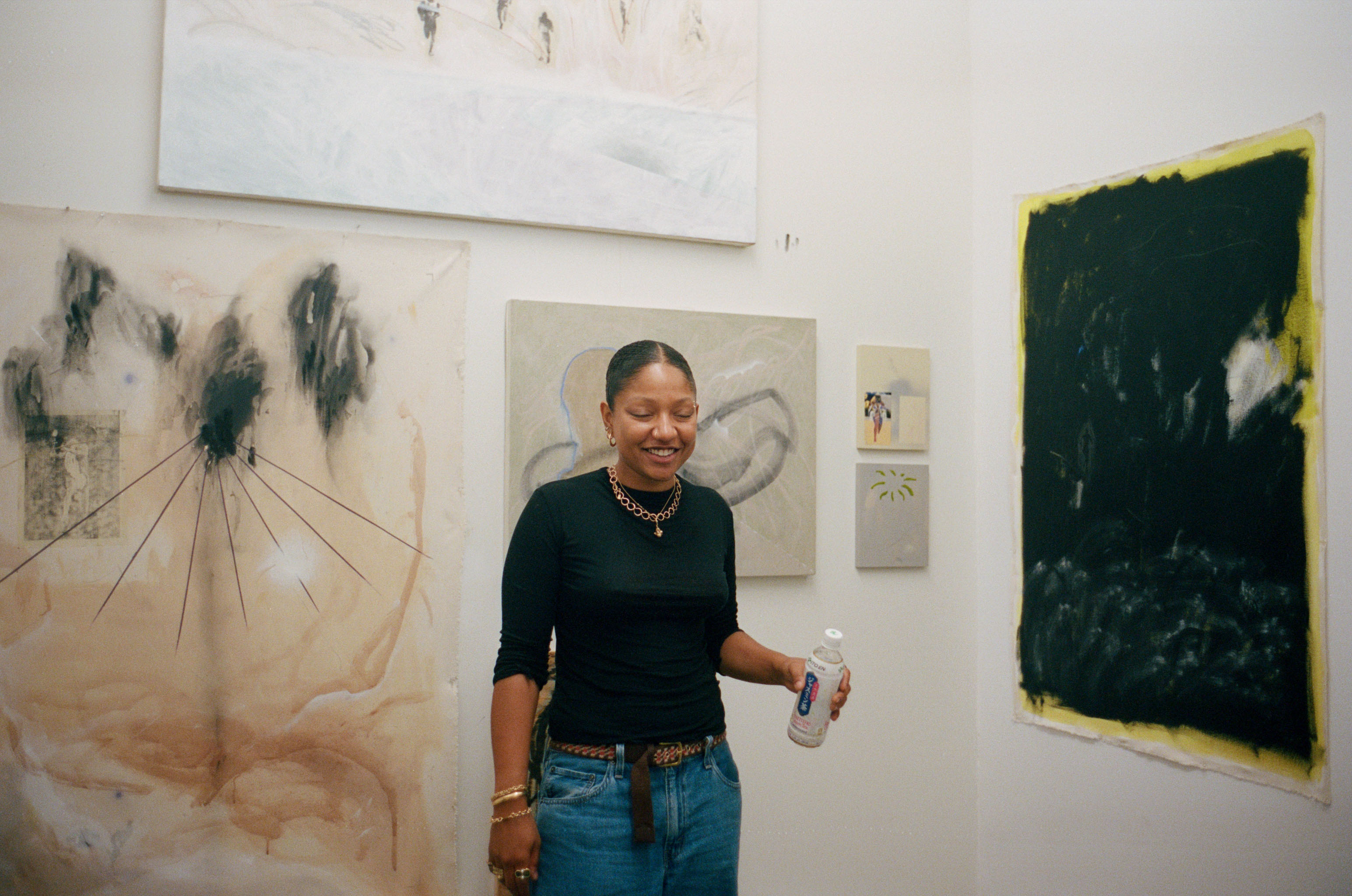
Can you talk me through your process?
So for this whole track and field series, it's all been pretty heavily research based. When I was in seventh grade, our teacher showed us a video of Mike Powell breaking the long jump world record at the time. And he was showing it to us to give us an example of velocity. But what I took from it was just the otherworldly powers of black people, and particularly Mike Powell. And then I started collecting Sports Illustrated magazines, track and field magazines, just trying to get as many of the images that I could get, because I found myself really drawn to those images. I started reading a lot. The Souls of Black Folk was a big one for me, as well as this book called Passing the Baton: Black Women Track Stars and American Identity. And so that's when I started thinking about how the dominance of black people in track and field was challenging the ideas of American identity, particularly in the Olympics, having black people representing America and winning for America at a time when America wasn't really into representing them.
[on working on several pieces at once]
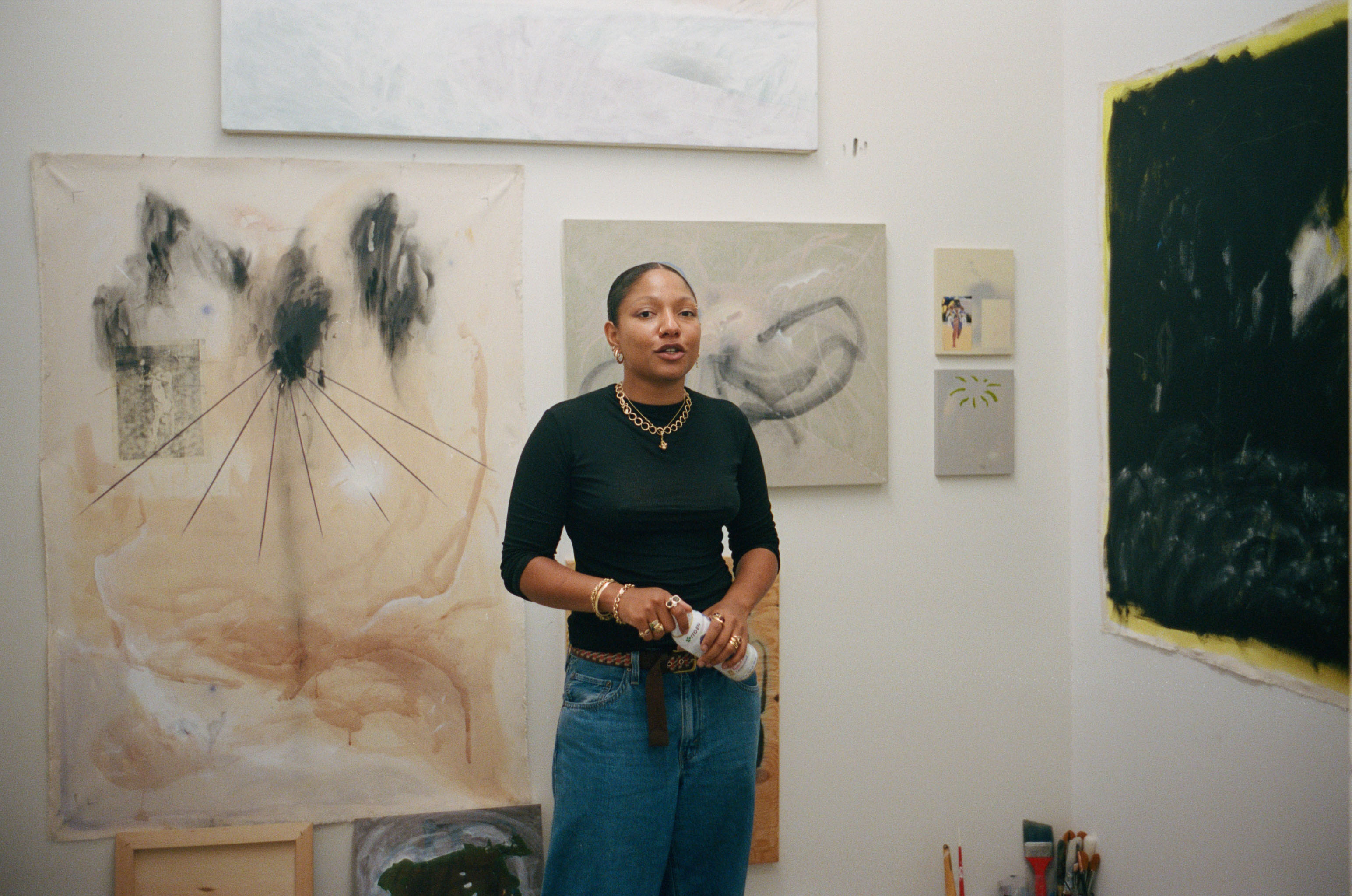
That was really pivotal and kind of revolutionary for me for the series and for my practice in general. Because before I had a problem where if I got stuck on a piece, I was stuck on everything. You know, it was just this kind of hold up for me. But now that I was working on 10, 12, 15 pieces at a time, it all changed. Because even in one session of going to the studio, I could work on one piece for five minutes, and then turn around and work on the other 12 pieces.
That's also something that my mentor told me, that even if you think something's done, just having it up and seeing it in relationship with the other things that you're working on, might change things. And he encouraged me to, as he put it, start building a language with the marks that I was making at the time. And with all these different ideas that I had, that it was okay to reuse marks and start to refine this language that I was making.
I love this idea of liberation in abstraction, I feel like this has been talked about to no end, but there is a manner in which black artists have always dealt with abstraction that is antithetical to what art history has made us think about abstraction. There has always been feeling in our abstraction, there has always been meaning. Do you see yourself as also working within that specific tradition?
Absolutely. There's been a big boom for black abstractionists in the past few years, which is so incredible. Even if it's not representational, I feel like black artists have a way or an invisible duty of making works that are more than just aesthetic. And I think that comes from the history of art. Even self taught artists like Bill Traylor, I think he was very aware of the fact that he was documenting things from a perspective that hadn't been done before. And it wasn't just a leisure time activity for him. And that's evident in the kind of materials that he was scouring for.
And so I always had a love for abstraction, as well as research–based projects by artists, like Lorna Simpson or Glenn Ligon. All these things meant something completely different because it was black people making it. And so I wanted to keep up with that tradition. And I also have a lot of interests outside of art. In college, I was an English and Art major so a lot of the literature that I was reading in English classes was very much affecting the work that I was making. I never saw value for myself in making work that wasn't rooted in this discourse.
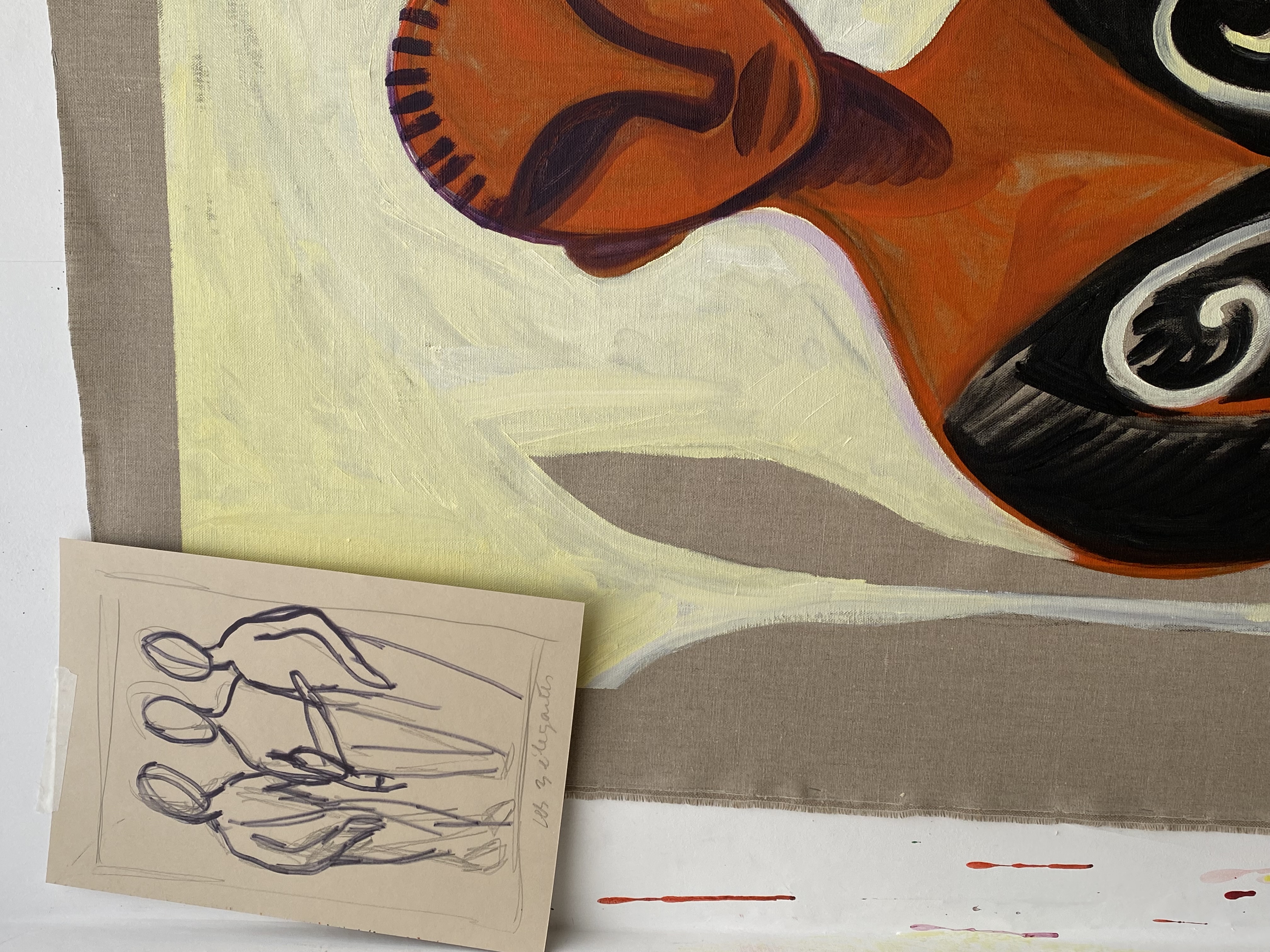
I also started thinking, in terms of my practice, about the relationship between abstraction and representation. I started thinking a lot about being a black person, and how you can go so quickly from being hyper visible to invisible and what that sensation feels like. And so I was trying to bring form to that feeling. What I realised, with the help of chatting with Charles Gaines, was that, in my work, I was using the representation to represent the hypermobility aspect of being seen, so vigilantly, and then using that abstraction to represent the invisibility of it all, and the formlessness of being and feeling invisible in spaces. And so that was also really interesting to start thinking about it in those senses, because once I did that, the language that I had been building and creating for myself expanded, like tenfold. And it made for rules, that I am willing to break of course, but rules and guides for how I was going to articulate this language moving forward.
What does Manifold mean to you?
Manifold to me means having a lot of parts. But to think about it differently, is to think about seeing all these parts on top of each other and seeing the relationship of these parts. And so when I think of Manifold, I kind of think of those diagrams on walls, when you have post-its and then you put strings tying everything together. Because there are so many connections that maybe aren't seen initially, because there are so many parts, but at the same time, maybe you don't realise immediately how they go together. And so I think it's kind of brilliant to do a group show about it, because it's a lot of different people's works, but when it comes together, it's cohesive.
